
How Ineffective Learning Methods SLOW Your Artistic Success.

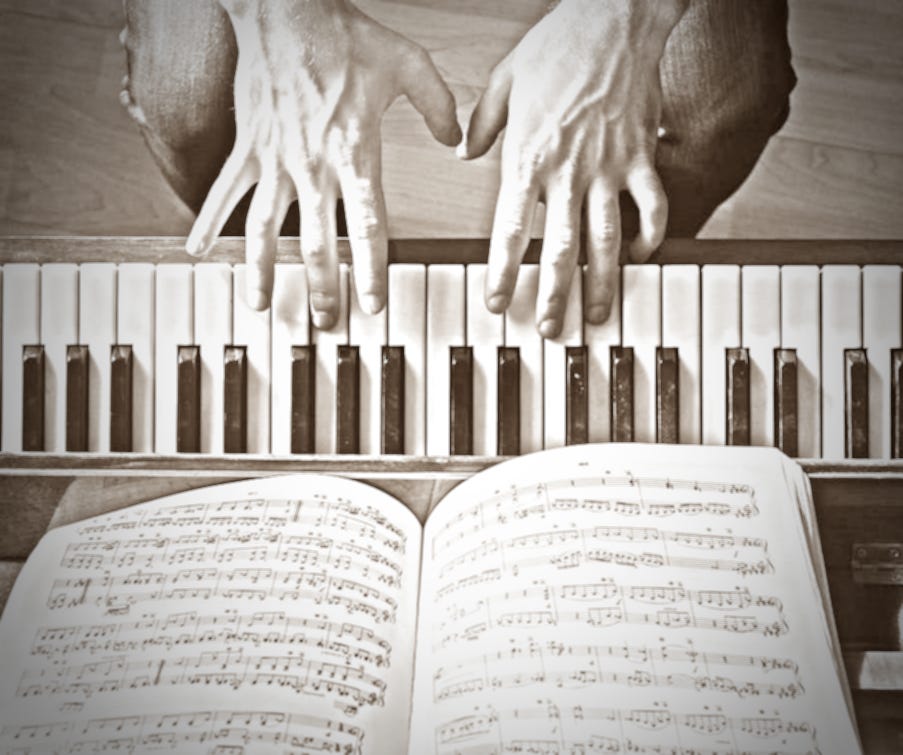
I have this idea for several piano pieces I’d like to compose. But I don’t have the skill in musical notation to make them yet. My lack of skill stops me from creating what I want to make, and it does for you too.
We can rectify our lack of abilities through practice. When I was around nine years old, I remember learning a difficult piano sonatina for a competition. I’ll never forget going into my teacher’s house to play it for her and my shock when she said, “Good! Now go practice it one-hundred times a day.” I thought she was joking. After all, One-hundred sounded absurd to me. Yet she insisted that she was dead serious.
Although I didn’t count to one-hundred, I practiced harder than ever before and got 3rd place—my first time placing in a piano competition.
It’s easy to get discouraged by the shining brilliance of other artists. I look around and see the incredible talent there is. How did they get that good?
When I was learning more challenging piano pieces, I couldn’t practice in my old ways—it was too inefficient. I knew that all the other pianists were on the grind, some for hours a day. However, I didn’t want to practice for hours a day, so I learned a different tactic.
After doing some research, I came across four principles of effective practice:
Attentively watch others who have the skill you are learning and mimic them.
Identify points of friction, the things that keep you from progressing.
Break the problem down into micro-level skills, master them individually, then sequence them into a larger whole.
Practice and review twice a day to ensconce the skill into long-term memory.
After applying these principles into my practice routine, I got 2nd place at a Weber State University Piano competition—the highest I had ever placed at a state piano competition.
Make these principles into daily habits to create a deadly practice routine in any field. Your growth will accelerate, giving you the trajectory of a prospective master instead of an amateur.